
Review
Texas
I Returned My Old Feeder After Trying Happy Birdy – Here's My Honest Review
I had used the same red plastic hummingbird feeder for seven years. It was nothing special—a basic saucer style from a big box store, maybe twelve dollars. I knew its quirks: the way nectar would drip down the side if you tilted it wrong, the ants that marched across the hanger like a highway, the black mold that appeared without fail by day three. It worked. Barely. But I assumed all feeders were basically the same, so why bother changing?
Then a friend left town and asked me to watch her Happy Birdy feeder while she was gone. Two weeks later, I ordered my own. And yes, I returned the old feeder to the back of the garage where it belongs. Before I walk you through exactly what changed, here is where to see the current Happy Birdy models and pricing.
The Breaking Point: What Made Me Finally Switch
The old feeder had a particular talent for hiding mold. The base would twist off, but the feeding ports had tiny crevices that a bottle brush could not reach. Every few weeks, I would discover a patch of black gunk that had been sitting there, invisible, while hummingbirds drank from it. That bothered me more than the ants or the drips or the constant scrubbing.
When I borrowed my friend's Happy Birdy, the first thing I noticed was the top-fill design. You unscrew the lid from above. No inverting, no sticky hands, no nectar running down your wrist. The second thing I noticed was the ant moat—a simple ring that you fill with water, and ants simply stop. No sticky tape, no petroleum jelly, no barriers that trap dead insects.
By the end of the first week, I knew I was not giving the feeder back. If you are tired of the same frustrations, check whether the Happy Birdy is in stock right now.
The Side-by-Side Test That Convinced Me
I ran both feeders simultaneously for ten days. Same nectar recipe (4:1 water to white sugar). Same location, six feet apart on the same porch. Same weather conditions. Here is what happened.
Day 1–2: Both feeders attracted hummingbirds. The old red plastic got slightly more visits initially, probably because the birds recognized the familiar shape. The Happy Birdy's opaque white body took an extra day for traffic to equalize.
Day 3: The old feeder showed visible mold spots around the feeding ports. The Happy Birdy still looked clean inside and out.
Day 4: Ants found the old feeder. A trail of small black ants marched down the hanging wire and across the base. The old feeder has no built-in barrier. The Happy Birdy's water moat remained dry of insects. Not one ant crossed.
Day 5: I cleaned both feeders. The old feeder took eight minutes, including scrubbing crevices with a toothbrush. The Happy Birdy took three minutes—wide mouth, smooth interior, no hidden gaps. I refilled the ant moat with fresh water.
Day 6–10: The pattern held. Old feeder needed cleaning every 3–4 days. Happy Birdy went 5–6 days between cleanings. The difference was not dramatic—two extra days—but over a summer season, that is roughly fifteen fewer cleaning sessions. That is real.
After day ten, I stopped refilling the old feeder. It hangs empty now, a reminder of how long I put up with unnecessary work. See the exact model I switched to and what it costs today.
What I Actually Like (Not What Marketing Says I Should Like)
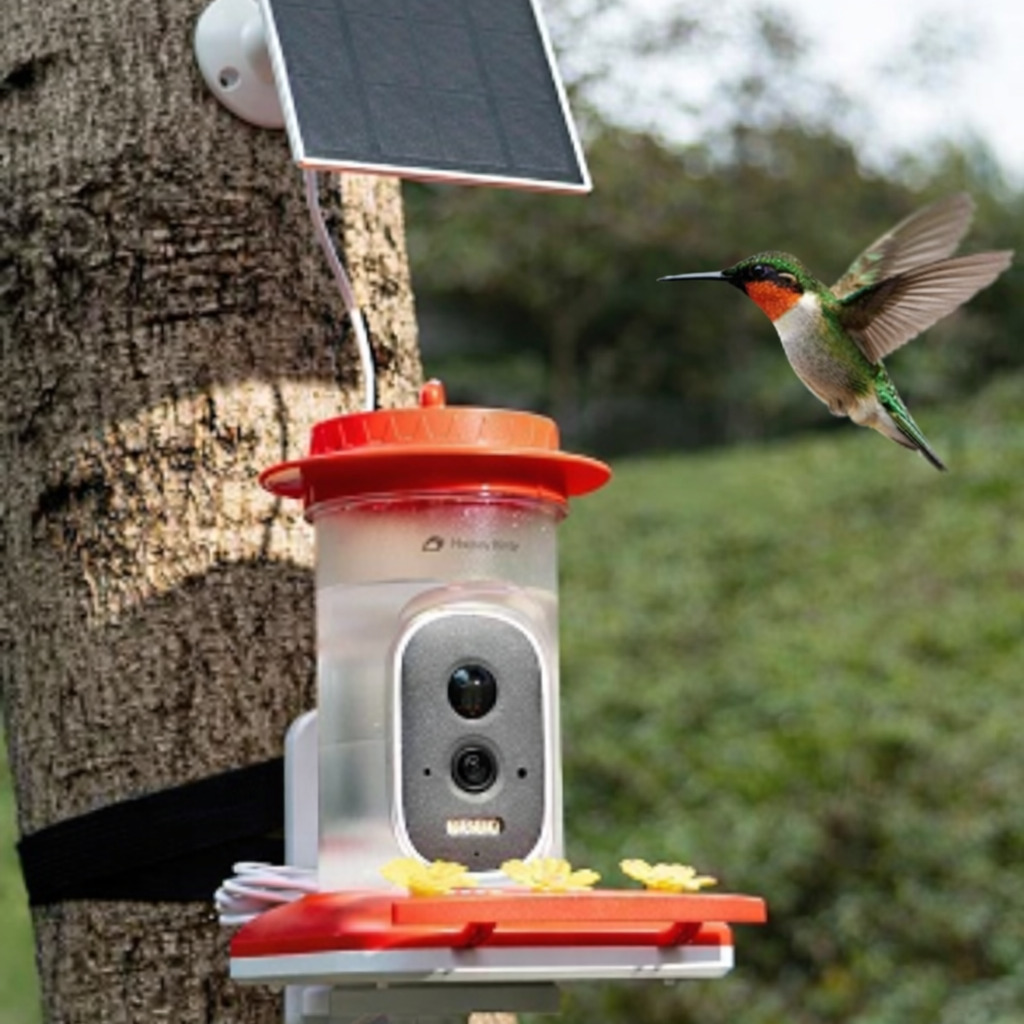
The marketing materials emphasize the smart features—the camera, the AI, the app. I bought the standard Happy Birdy without any of that. My review is for the basic model, and here is what genuinely matters to me.
The top-fill lid. This sounds trivial until you have used it. Traditional feeders require you to flip the entire unit upside down to fill it. Nectar spills. The base often sticks. You end up with sticky hands and a messy porch. The Happy Birdy unscrews from the top. You pour nectar in like filling a water bottle. It is so obviously better that I am angry it took me seven years to try one.
The ant moat that actually works. I have tried everything. Sticky barriers that caught feathers. Cinnamon powder that washed away in the first rain. Hanging the feeder on fishing line (ants still found a way). The Happy Birdy's water moat is stupidly simple. Fill it with plain water. Ants cannot cross water. It works 100% of the time as long as you remember to refill the moat every few days.
The opaque body. Clear plastic feeders let sunlight through, which accelerates mold and bacteria growth. The Happy Birdy is white and opaque. The nectar stays cooler and fresher. You cannot see the nectar level from across the yard, which is a minor inconvenience, but the trade-off is worth it.
The wide mouth for cleaning. I can fit my whole hand inside the reservoir. A bottle brush reaches everything. There are no weird corners or hidden crevices. Cleaning takes half the time of my old feeder.
If you want a feeder that solves these specific frustrations without any smart features, check the standard Happy Birdy model here. It costs significantly less than the AI version.
What I Do Not Like (Because No Product Is Perfect)
Honesty matters, so here are my genuine complaints after a month of daily use.
The hanging hook is too small. The feeder comes with a metal S-hook that barely fits over a standard shepherds hook. If your hook is thick or oddly shaped, you may need to buy a larger S-hook separately. I did.
The ant moat needs frequent refilling. In hot, dry weather, the water evaporates in 2–3 days. If you forget to refill, ants will cross. This is not a design flaw—water evaporates—but it is an ongoing task that the marketing downplays.
The lid can stick. The rubber gasket on the lid seals tightly to prevent leaks. That is good. But if you overtighten the lid, it can be stubborn to unscrew. Hand-tight only. Do not crank it.
The price is higher than basic feeders. The standard Happy Birdy costs about three times what a basic plastic feeder costs. For me, the reduced cleaning and ant elimination are worth it. For someone on a very tight budget, the value equation may not work.
Who Should Buy the Happy Birdy (And Who Should Not)
After a month of use, I have a clear sense of who benefits most.
Buy the Happy Birdy (standard version) if:
- You are tired of scrubbing mold out of tiny feeder crevices
- Ants have made you consider giving up on hummingbirds entirely
- You have the budget for a $40–60 feeder instead of a $15 feeder
- You value your weekend time more than the upfront cost difference
Stick with your current feeder if:
- Your existing feeder works fine and you do not mind the maintenance
- You are on a strict budget and prefer to spend money on sugar instead
- You enjoy tinkering with homemade ant solutions and cleaning hacks
Consider the AI camera version only if:
- You have a sunny mounting location and strong outdoor Wi-Fi
- You genuinely want to study hummingbird behavior through video
- You are comfortable troubleshooting occasional tech issues
I bought the standard version and have no regrets. The smart features are neat but unnecessary for my needs. Compare both models side by side to see which fits your lifestyle.
The Return: What I Learned About My Own Habits
Returning the old feeder to the garage felt strangely symbolic. For seven years, I had accepted a certain level of frustration as normal. Mold was just part of feeding hummingbirds. Ants were an inevitable nuisance. Cleaning was a weekly chore you endured.
The Happy Birdy did not eliminate those tasks entirely. I still clean the feeder every 5–6 days. I still refill the ant moat every 2–3 days. But the tasks are faster, easier, and less gross. The mold does not hide in crevices. The ants do not appear at all as long as I keep the moat filled. The nectar does not drip down the side of the feeder because the top-fill design is simply better.
What I learned is that I had settled for a bad tool because I did not know a good tool existed. That is on me. But now I know better.
If you are still using the same frustrating feeder you bought years ago, wondering if there is a better way, see if the Happy Birdy is available in your region. And if you decide to keep your current feeder, that is fine too. The hummingbirds do not care what brand you use. They just want clean nectar and a safe place to drink.
The old feeder stays in the garage. The Happy Birdy hangs on the porch. And for the first time in seven years, I actually look forward to refilling it.
Disclosure: I purchased my Happy Birdy feeder with my own money after borrowing a friend's. No one paid for this review. No free product. Just an honest account from someone who waited too long to make a simple upgrade.